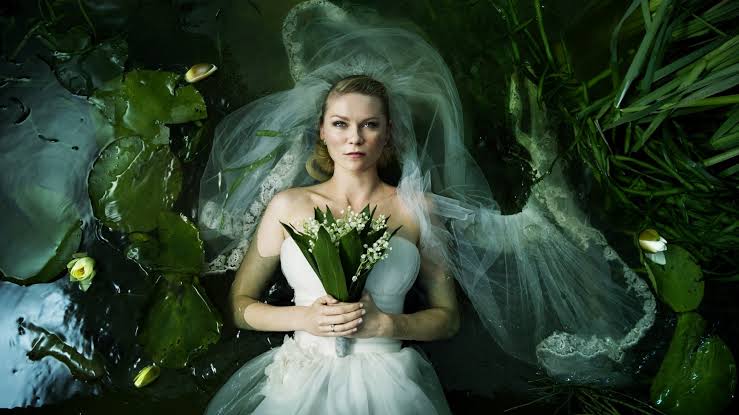
As promised, I’m now going to avoid reviewing too many mainstream films and start talking about some relatively unknown gems of cinema. Melancholia is the first step towards that.
Melancholia is relatively famous, but the average movie-going audience has likely never heard of it or Lars Von Trier. To begin with, Lars Von Trier may be a genius, but I’m not his biggest fan. Although the authenticity with which he manages to portray emotions is nothing short of remarkable, I still don’t find his choices as a filmmaker to my taste, but that’s a matter of personal opinion. His references aren’t easy to pick up on. Honestly, I don’t think I should be reviewing this film; I’m happy to admit that maybe I didn’t understand some of the things. To be able to comprehend a creative genius like Von Trier completely, you need to have immense knowledge of many subjects, something that I don’t think I possess. But I’m still going to try. For me, this film was both a pleasant and exhausting experience.
Getting into the film, Melancholia stars Kirsten Dunst and Charlotte Gainsbourg as two sisters whose lives get entangled when they discover that Earth is about to collide with an enormous planet called Melancholia. This film, like other Von Trier films, is slow, and sometimes too slow. The film is a spot-on study on depression, impulsiveness, anxiety and some other issues. I’ve never seen such an honest portrayal of depression to the point that it can make you uncomfortable putting yourself in the character’s shoes. “It tastes like ashes”, says Justine (Kirsten Dunst) while eating meatloaf, that pretty much sums up what I’m saying, how you find even the most beautiful things to be awful when you’re depressed. This film addresses depression for the illness it is, the impact it has on someone and others around that person while also depicting issues like dysfunctional families, among others. Every character is written from the perspective of reactions different people have to a depressed person, and I mean crippling depression. The film is divided into two acts; Act 1 examines the themes mentioned above. By the time of Act 2, the film takes a bath in the supernatural (sci-fi would be a better word, I guess). Now if you’re wondering how these two manage to work together, they don’t, but Von Trier somehow manages to make sense of it.
There’s still a lot that I don’t like about this film. The whole deal with the planet can have many interpretations; I won’t offer any of my own. The concept is excellent, but the pace of plot progression prevents me from thoroughly enjoying it. I like slow films, but this one is too slow for its own good which coupled with shaking camera can be sleep-inducing if you’re not accustomed to movies like this, not to mention the whispered dialogues. This is precisely what I meant by his choices as a filmmaker. But, some of his choices, like the closing scene of the film, make him truly unique. Although technically, the second act is far superior, I found the execution of the first act to be much better.
I wouldn’t say I liked this film as much as I thought I would. Some other noteworthy things about the film is its beautiful imagery, and the colour grading is brilliant. I’ll place it among the movies with the best cinematography of this decade. Although I see the appeal of this film and why some people might like it, it’s just not to my taste. The best I can explain it is, this film is like a music genre that you can understand why some people enjoy but don’t find yourself connecting to it. Lars Von Trier and his followers see some sense of accomplishment in negative responses his films garner and treat them like a certificate of his genius. For me, this was a long and mentally exhausting experience, although I still enjoyed a lot of it. And even though I’ve enjoyed some of his films like Nymphomaniac and Dogville in the past, this one just had something missing. Maybe I’ll revisit it a few years later and see if my thoughts on it change.
Rating: 3.5 / 5.
 Everything Cinema